Story
Squadron Malta: Origins, Festivals & the Road to Glitch

Squadron is one of the most recognisable names in Malta's electronic music history. What will become evident to readers throughout this article are patterns of attention to detail like no other and a deep, uncompromising love for electronic music. In doing so, Squadron built a cult following, played a pivotal role in shaping Malta's electronic music and club scene, and helped lay the foundations for what is today's mighty Glitch Festival.
We sat down with Karl Attard, Squadron's co-founder, to hear the story behind one of Malta's most iconic names in electronic music.
Origins
Squadron's story began with Karl and Rudi, cousins who developed a love for electronic music from an early age. Karl worked in graphic design, which would later shape Squadron’s visual identity, while Rudi was honing his skills as a DJ. Early influences included names like Legowelt, Bangkok Impact, DJ TLR, Alden Tyrell, I-F and other Dutch producers from labels like Bunker, Clone, Viewlexx and Crème Organization records.
Karl and Rudi’s entrance into organising events was as random as a story can be, and one cannot help but wonder what would have happened if the set of coincidences had not come about. Would Squadron even exist?
Out of practically nowhere, news of a 2002 event featuring Legowelt caught Karl and Rudi’s attention. They reached out to the promoter to learn more about the event. Through this connection, Karl ended up designing the event’s artwork and was later asked to join forces for their next event. He agreed, and brought Rudi along. That event, which took place in 2003 and featured Spacid, would become the first official Squadron event. They were only 17 and hadn’t even started driving yet. The relationship with the other promoter went nowhere, and from that point, it was just Karl and Rudi.
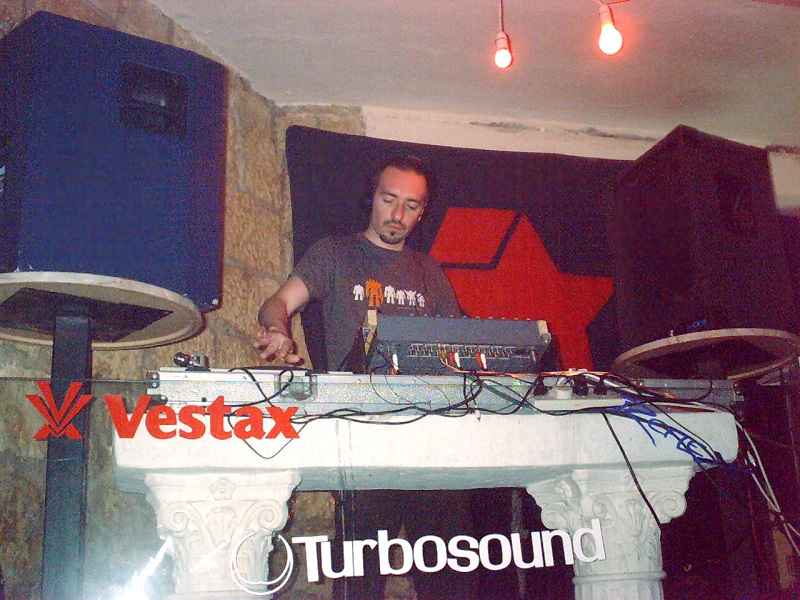
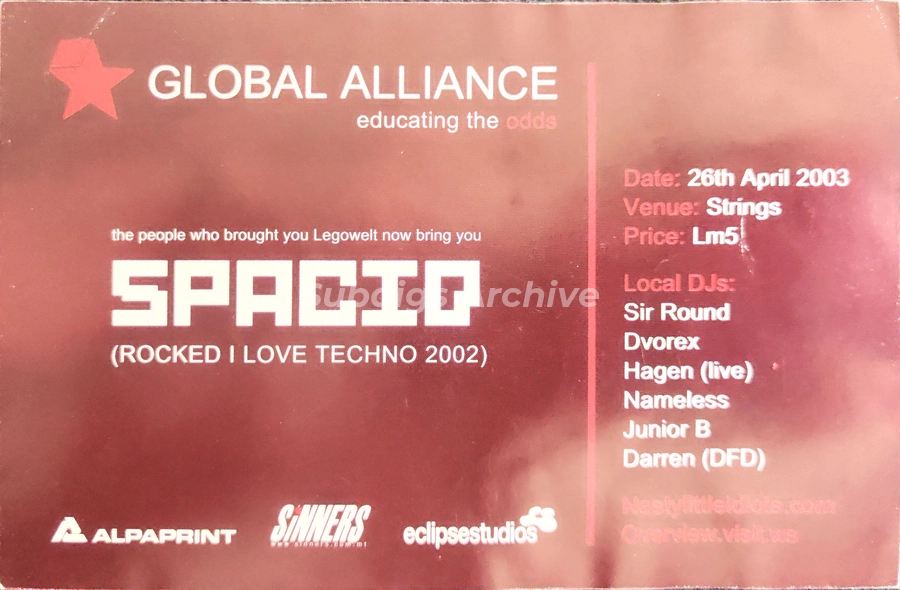
Squadron’s foundation was built on one simple rule: the artists they brought over were artists the founders were genuinely into. If they were not going to enjoy the night themselves, they saw little point in hosting the event. These were names they would travel abroad to see. As Karl later explained, the focus was always on building events around music and having a strong awareness of who was who in the scene, rather than following what everyone else was doing.
In terms of the founding team and changes there, Kevin, who had already been helping out by that point, stepped in to replace Rudi around 2007 when Rudi moved abroad. Karl and Kevin are also cousins.
Branding
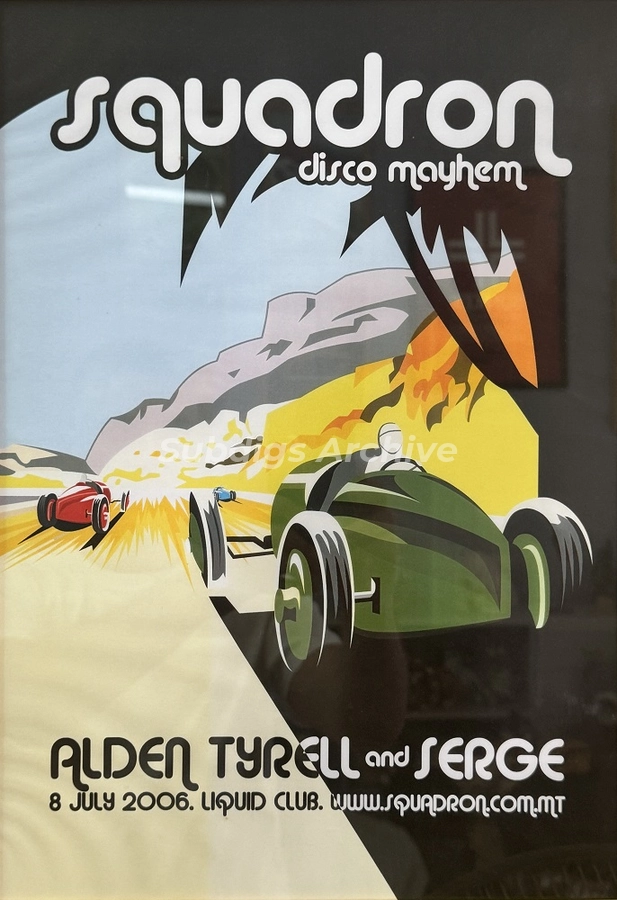
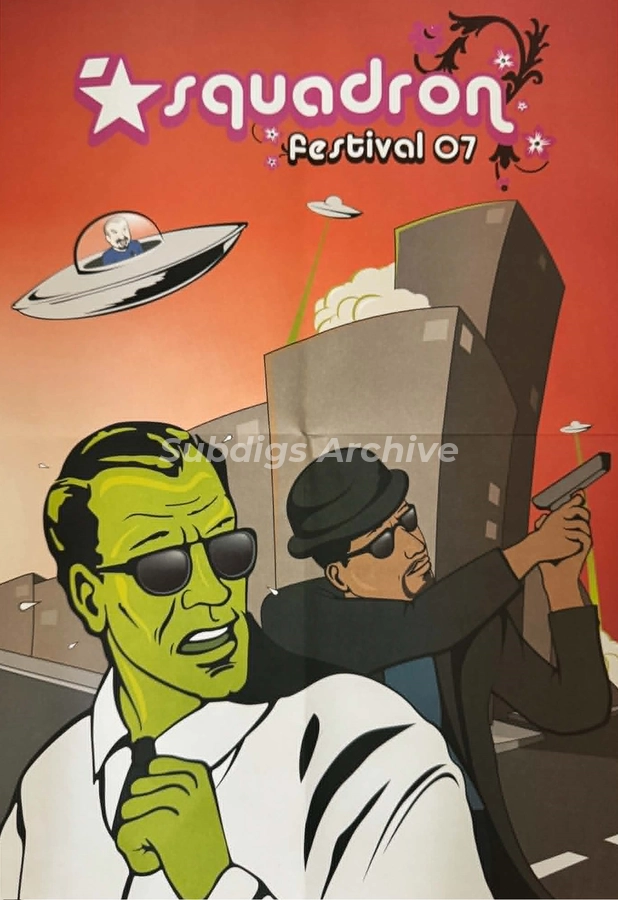
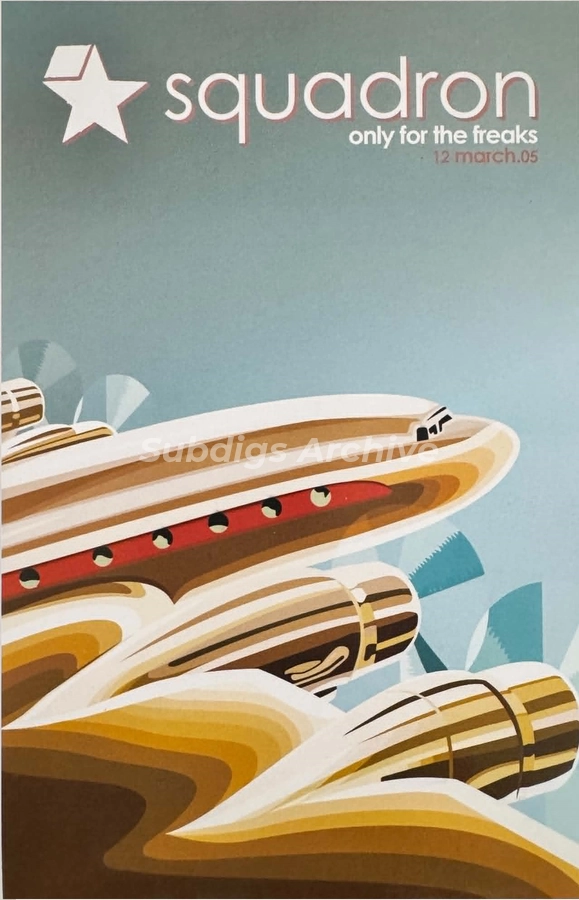
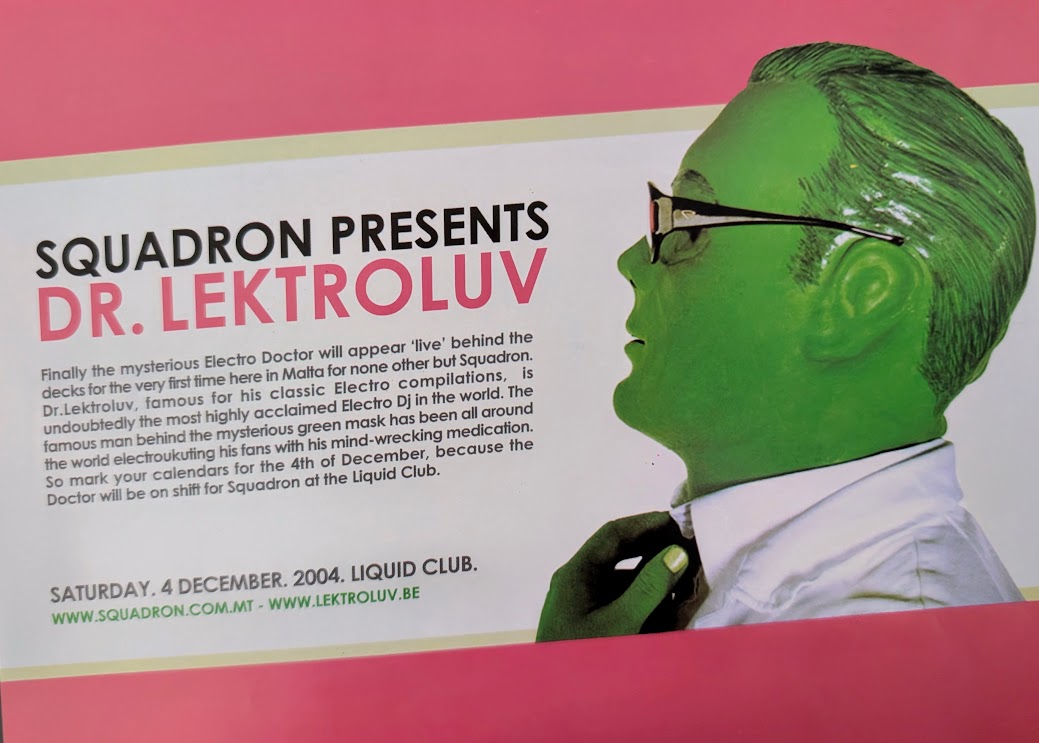
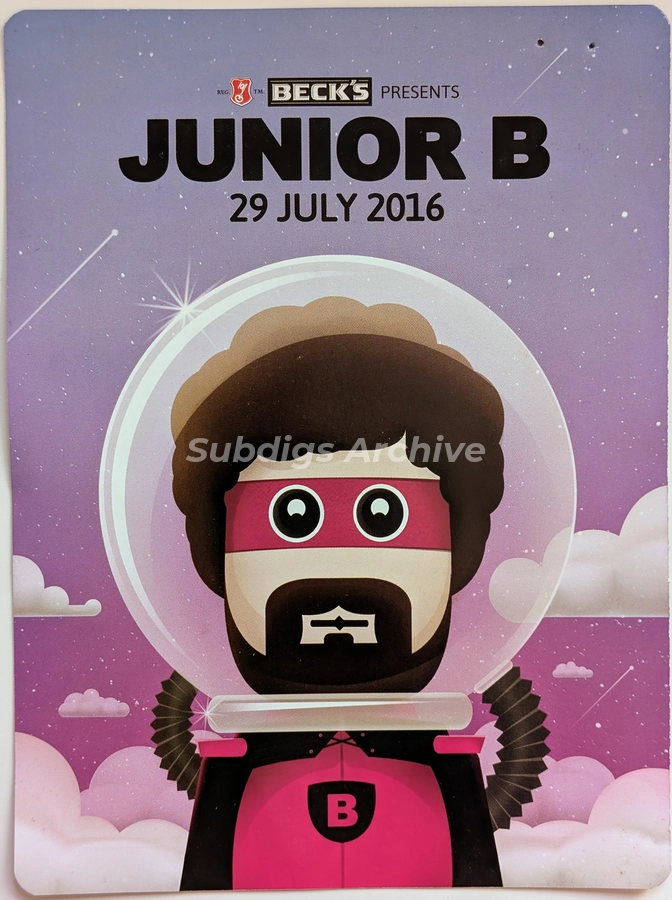
Branding was extremely important to Squadron, and one of the clearest expressions of this was their flyers. Anyone could look at them and instantly recognise them as Squadron flyers. They stood apart from most designs at the time. The bold, cartoon-like artwork helped define their identity and played a key role in establishing the brand. Karl mentions that this was very important to them and helped them become a respected name from the outset. As a graphic designer by profession, Karl handled the branding himself, and in fact, most of Squadron’s visual identity was created by him, sometimes in close collaboration with illustrator Hagen Ebejer. At the time, they would also print pre-flyers before releasing the final flyer design.
The attention to detail across branding and marketing was hard to miss. Everything from flyer design to content creation, as well as making use of the tools available at the time such as their website and forums, played a major role in Squadron’s growth and recognition.
Introducing Electro to Malta's Club Scene
Throughout the 2000s, Squadron’s focus was not only on building a following and organising events around that community, but also on shaping it around a sound that, at the time, was still new to the island. This was no easy feat in an era where access to music was far more limited than it is today. There was no YouTube or Spotify, and discovering new sounds required much more effort. In Malta, the dominant sounds were largely techno through the likes of Genetix, or house music.
Squadron were ahead of their time in how they approached this. They were likely one of the first crews on the island to have a website. They would upload snippets and mixes for people to download, giving people a first taste of the sound they were pushing. This proved highly effective, with strong engagement and download numbers. It resonated with a crowd already drawn to that sound, and this is where a sense of community and loyalty began to form.
Other forms of promotion included handing out CD mixes at events, featuring mixes from artists scheduled to play upcoming Squadron nights. The music played at the events themselves also helped push the sound further. Since many of the artists came from the same record labels, clubbers would often hear tracks from other acts on those labels, including artists who would later appear on Squadron line-ups.
Junior B’s radio show, Electronic Theory, was also an important channel for pushing the sound. For events where he was playing, he would actively promote the nights on air, making it a key part of the wider effort to introduce and establish the sound on the island.
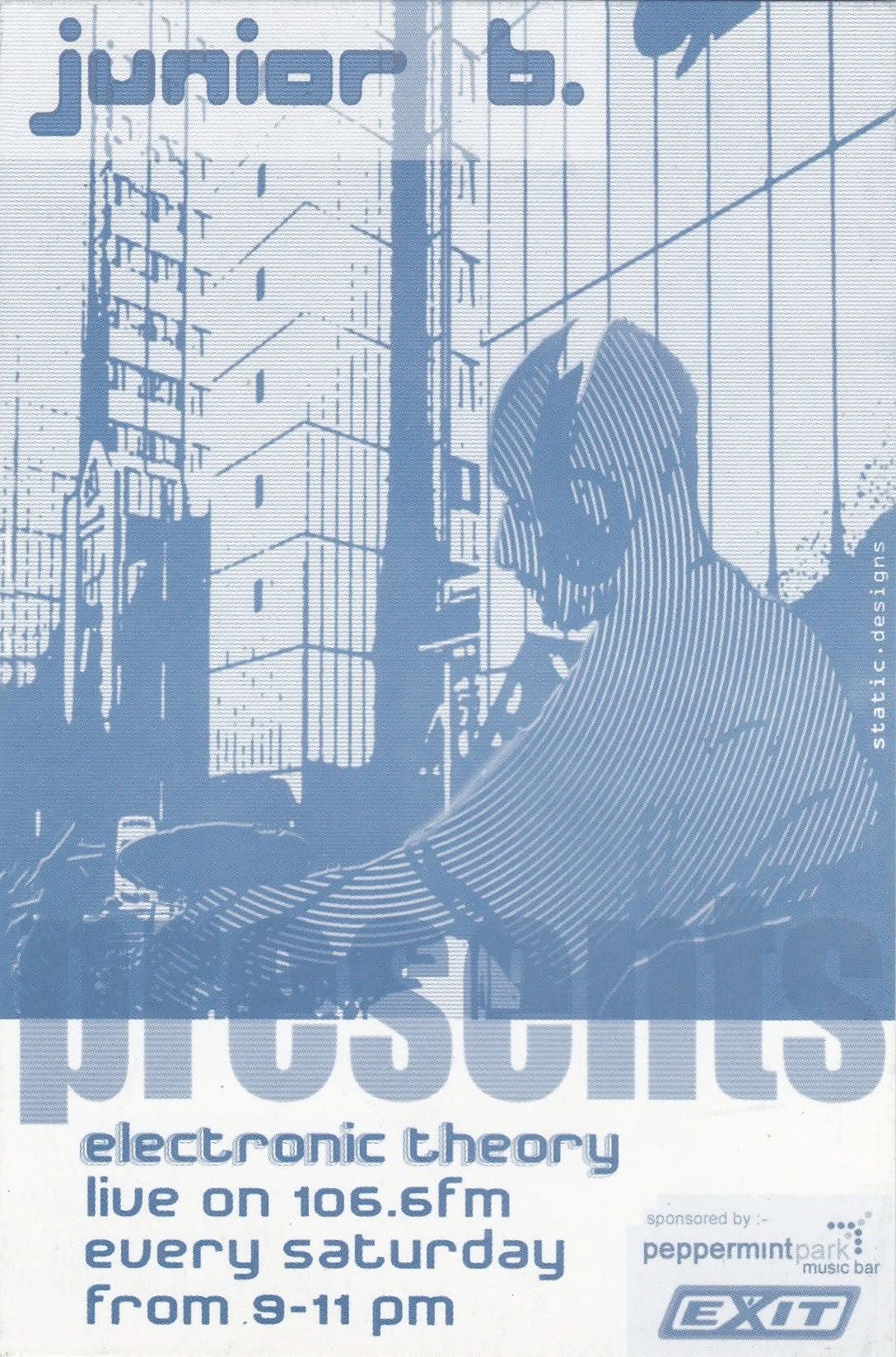
Karl recalls that promoting an event was more personal and physical back then. Flyers and posters were distributed in person, you’d have runners and outlets, and word of mouth played a huge role too. This also meant there was more running around and more risk involved. Since ticket sales were done in person, there was an element of trust, and there were even times when ticket money was never collected.
Competition between promoters was also a factor. Clubbers were generally associated with certain promoters, and in turn those promoters worked to retain their followers. With events being rare by today’s standards and the underground crowd being quite small, if someone hosted a night a week before yours, it would eat directly into your crowd. This created friction between promoters at times, and certain rivalries did form. For the most part though, promoters would agree on dates, often leaving two-week gaps between each other’s events. Fewer events also meant that the anticipation leading up to each night was much greater.
Despite all this, Squadron successfully positioned themselves as the authority in the electro, Italo disco, Ghettotech and Miami bass space, introducing these sounds and being among the only promoters bringing artists from these genres to the island. To say they built a loyal following would be an understatement. Anyone who lived through that era will remember how much trust people placed in the Squadron name. If Squadron was behind it, people showed up.
Squadron organised a steady series of events throughout the 2000s, with Liquid Club serving as their home base (and remaining so throughout Squadron’s existence). Events averaged around 500 people, with some drawing much larger crowds, as will be seen later, and others smaller when more unknown artists were booked. Smaller crowds for lesser-known artists was a price Squadron were willing to pay, as they prioritised music over name recognition or popularity.
Artists they brought over during this period included the likes of Legowelt, Bangkok Impact, DJ TLR, Alden Tyrell, I-F, Juan Atkins, Rolando, Aux 88, DJ Godfather and more. Their focus was largely on the sound coming out of The Hague, alongside the Detroit techno and Ghettotech scenes.
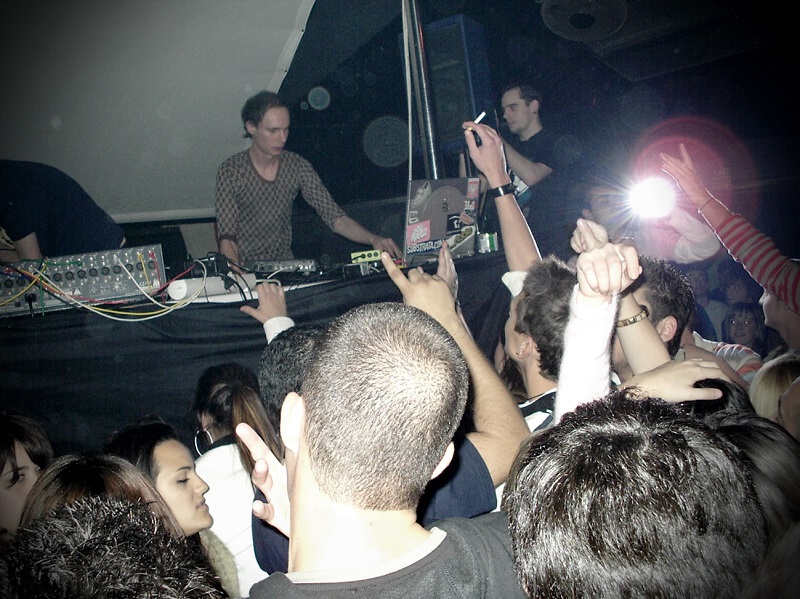
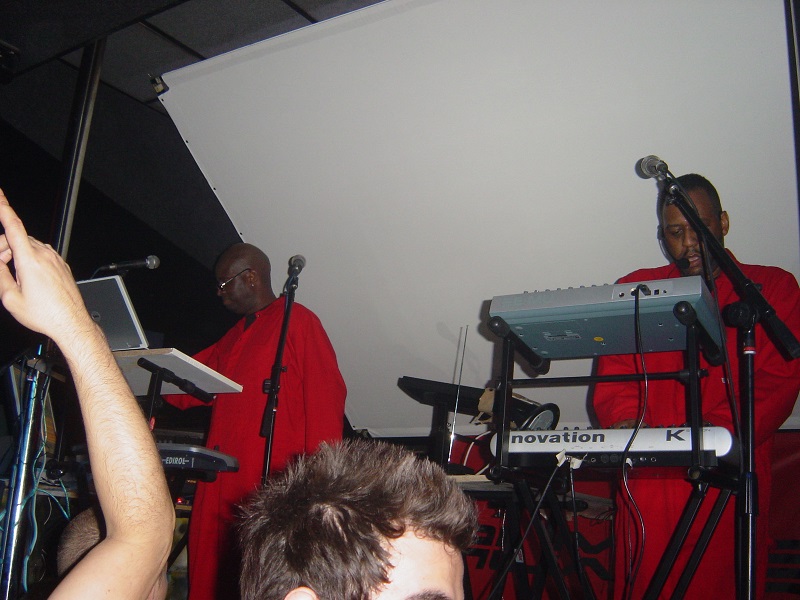
Legowelt was the artist who first introduced the promoters to electronic music, and he remains the artist Squadron (and Glitch) brought over the most. This highlights how deeply rooted their passion for music was, and that it was not a passing phase.
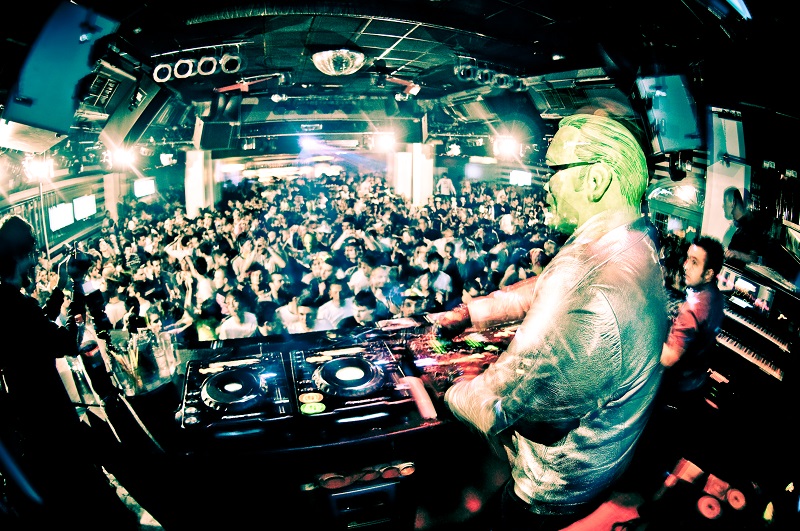
Another artist who became well known through Squadron during this era was Dr. Lektroluv. He was arguably the most commercially recognisable, largely due to his green masked appearance.
Karl can't help but laugh as he recalls picking him up from his hotel and the reactions they would get when people saw a tall, green-masked figure casually walking through the lobby. It would also happen at traffic lights, with people in nearby cars looking visibly confused.
Breakthroughs
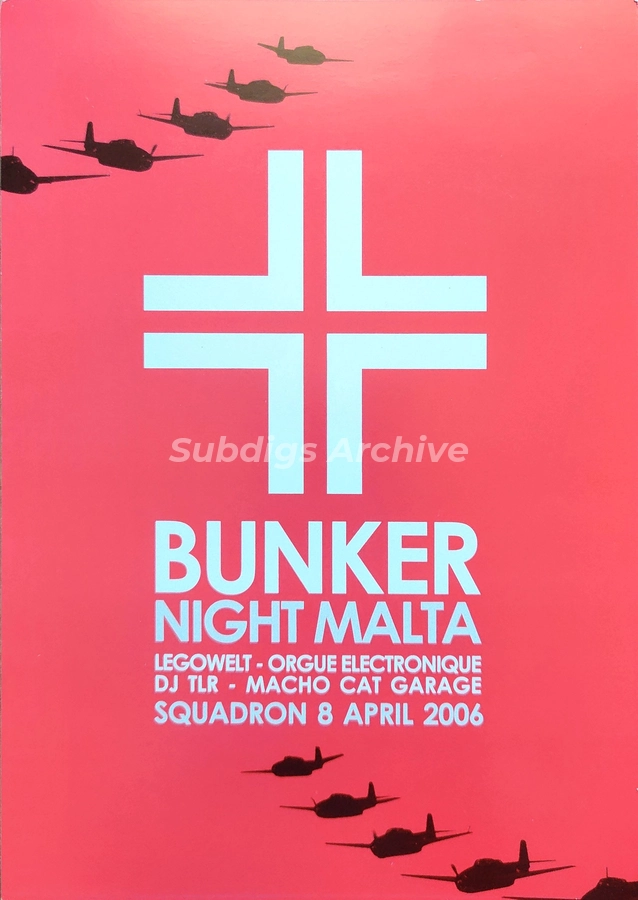
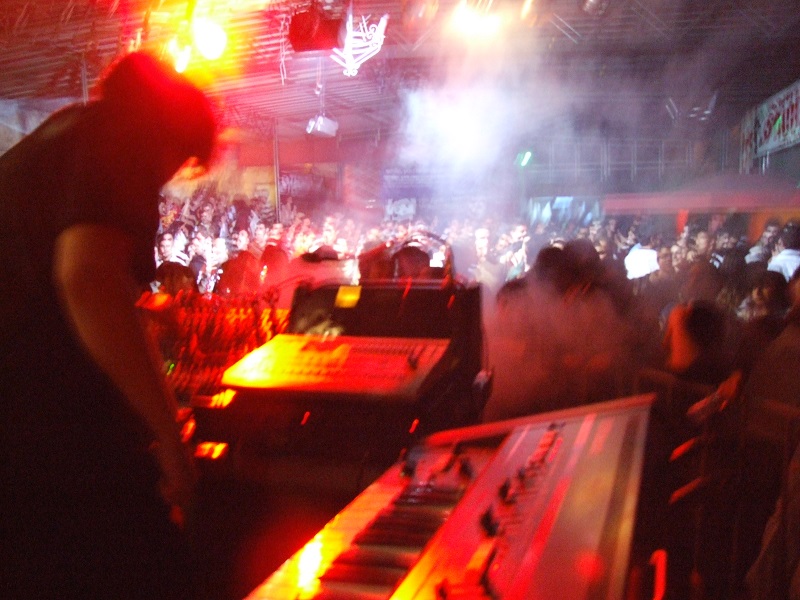
By the mid-2000s, Squadron had built a loyal following and could trust that their crowd would show up to their events. However, there were moments that stood out as something extra special. One event that certainly falls into this category was Bunker night, where 1,500 people showed up. This was a point where the promoters felt something had shifted, where it was no longer just the core attendees, but something that had extended beyond that.
Something else that stood out for the promoters was the feedback they received from artists, who would often say that when they came to Malta, they felt like superstars. The anticipation and reception they experienced on the island was unlike what they were used to in other locations. Hearing this directly from the artists was clear validation that their influence in the scene was strong, and something they were very proud of.
Squadron Festivals
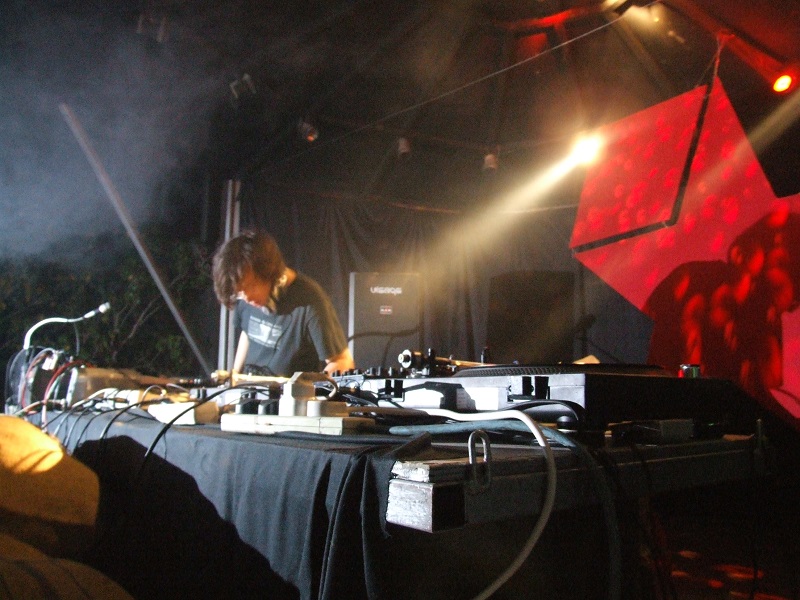
Squadron hosted three festivals, one in 2007, one in 2008, and one in 2010, all of them held at Buskett Roadhouse.
These festivals marked the promoters’ first exposure to organising events on a larger scale, skills that would later prove valuable when Glitch was formed. This included working with multiple rooms, a wider range of artists, and more developed stages, lighting, and production overall. As a result, their first festival in 2007 remained one of the most memorable events from their time in Squadron.
The promoters always remained very hands-on. For Squadron Festival 07, they went as far as building Dr. Lektroluv’s stage setup themselves and painting it to match the branding of the event. It was another example of the level of attention to detail that defined their work.
Even here, Squadron didn’t shy away from bringing underground artists. They could have played it safe with more well-known artists to guarantee bigger crowds, but didn’t. Nonetheless, these were still massive festivals by Malta’s standards at the time, which just goes to show the influence Squadron had in the scene.
The festivals also gave Squadron the opportunity to bring in artists who were not purely from the electro space. They also had an interest in house music, which led to bookings such as Marshall Jefferson and Kevin Saunderson, among others. Electro, however, remained the main focus, as their audience was primarily there for electro artists.
A particularly chaotic experience Karl recalls was Squadron 07, which took place in October during a week of heavy rain. It was an open-air event, and in the final week a tent had to be brought in to cover the entire setup, along with changes to the stage and overall plan. It didn’t rain in the end, and the festival was a massive success.
Adapting to Change
As more in-demand artists such as electroclash acts Miss Kittin and Anthony Rother began gaining recognition locally, Squadron remained committed to their roots and continued bringing over artists who were lesser known internationally. It’s worth keeping in mind that many of these artists were already well known in Malta, thanks to Squadron, who introduced most of the names that went on to become local favourites.
This was also around the time when social media and other tools began to be used more widely, which made things more challenging for Squadron. Access to information about which artists were in demand became much easier, yet Squadron continued to focus on bringing over lesser-known artists.
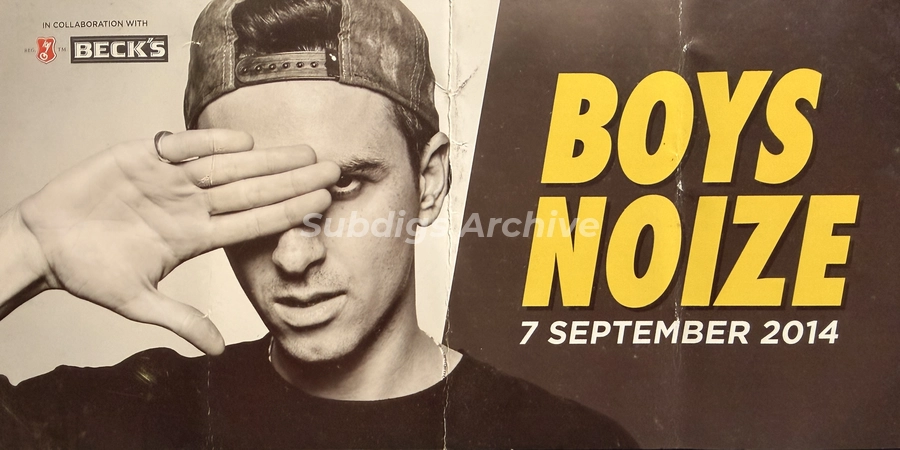
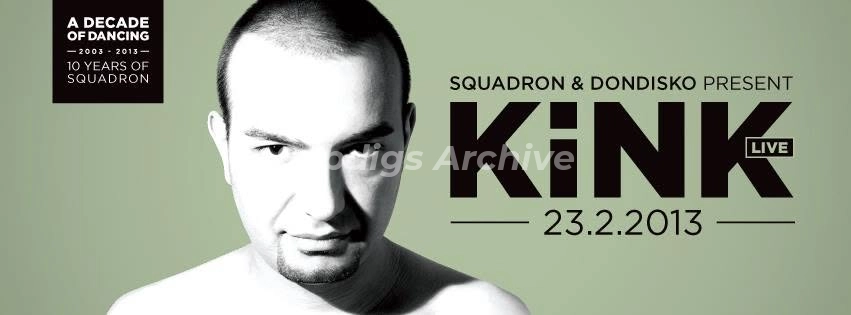
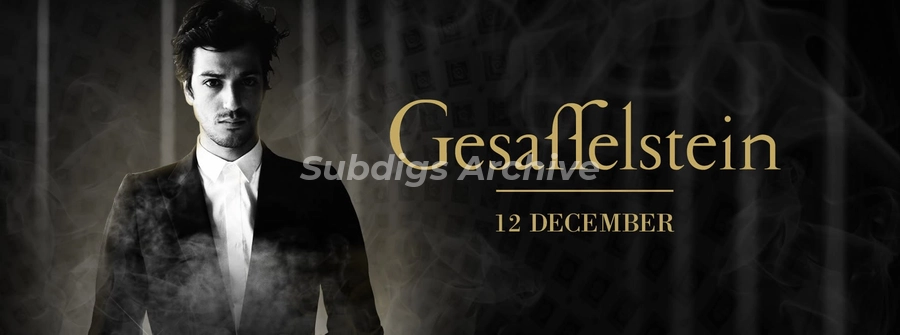
As the electro sound Squadron had been pushing up to that point began to fade, sounds spanning electro house and techno started appearing in Squadron’s lineups, with bookings like Boys Noize, Tiga, 2manydjs, Gesaffelstein, Kink and many others. It was also during this period that Squadron often collaborated with DonDisko.
In 2012, Squadron also organised the comeback of popular local DJ Junior B, after he had been out of the scene for some years.
End of an Era
As the 2010s drew to a close, Squadron started to feel that they had reached their limits under the brand. They had achieved everything they set out to do, but what they were doing remained reliant on the Maltese crowd, which was small and somewhat unpredictable. Having already tapped into that audience, they felt ready to move on to something bigger. They wanted to create something new for Malta and raise the bar. The only way to do this was to look beyond the local market and build a brand driven by quality and trust. This is where Squadron joined forces with Shift, and Glitch was born.
1st December 2018 marked the last Squadron event. The promoters were aware going into it that this would be the final one. When asked whether there was any sense of sadness leading up to it, Karl explained that it felt more like a natural closing of a chapter, leading into the evolution of the Glitch club series. By that point, Glitch Festival was already in its fourth edition, and all signs pointed towards it moving in the right direction.
Looking back, Karl mentions that the production of those earlier Squadron events wasn’t the best, whether it was club layouts, stages, lighting, and so on, but they worked with what they had and made the most of it. He also admits that there may have been one or two artists they booked that they're not particularly proud of in hindsight. However, adaptation was important for Squadron, as they aimed to remain key players in the scene.
When asked what Karl is most proud of from his time with Squadron, he mentioned building a following around a sound that was new to the country at the time. He also pointed to the fact that visiting artists were often impressed with the scene they had created, saying they felt like stars when they came to Malta, in a way that was far beyond how they were received in other countries. This was particularly satisfying. It was a niche scene, which made it challenging, but also more rewarding. Karl added that some of the best parties took place during that period, describing them as different times.
Squadron's legacy is one that anyone who lived through Malta's electronic music scene in the 2000's will immediately recognise. They didn't just organise events. They introduced a sound, built a community, and raised the standard of what a night out in Malta could be. In doing so, they became one of the most important chapters in Malta's rave and club history.
Enter Glitch
Glitch has become a juggernaut in its own right and the biggest homegrown festival in Malta.
Stay tuned for an in depth look and continuation to Glitch.