Story
Before SIN: Summer Solstice, Amnesia, and Malta's Early Raves

Before SIN became one of the defining names of Malta's early underground electronic music scene, there were already small groups of people experimenting with a very different kind of party.
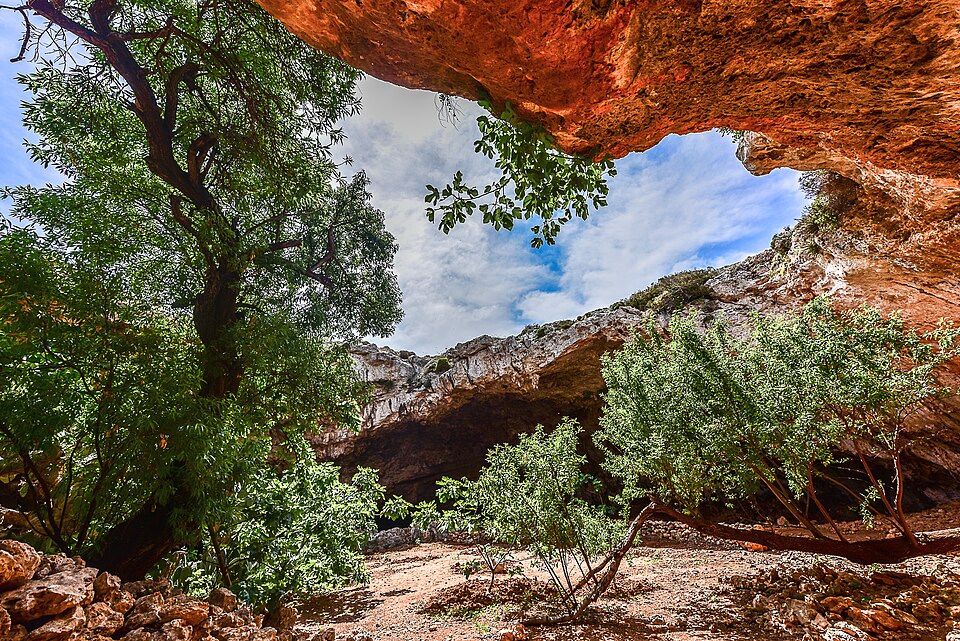
In the summer of 1991, two electronic music events were held at Mnajdra Temples and Latnija Cave (also known as Għar Tuta). Around 100 people attended each. There were no tickets, no official permits and little in the way of promotion. The events were built around music that was still unfamiliar to much of Malta, in locations that were far removed from the island's established nightlife.
They were not large parties, and they were not yet part of an organised scene. But for Mario, who organised both events, they represented something important: an attempt to bring to Malta the kind of electronic music and party culture he had discovered abroad.
A year later, the SIN parties would take that idea much further.
We sat down with Mario to hear how it started.
From Malta to Goa
In the late 1980s, Malta's nightlife looked very different. Places such as Axis, Styx, Dewdrops and Stownes were among the clubs drawing crowds, and while electronic music existed, the club experience was still a long way from the rave culture developing elsewhere. Mario wasn't particularly interested in it either. At the time, he was a rocker and says he actually hated electronic music. That changed after a three-month trip to Goa, India between December 1988 and February 1989.
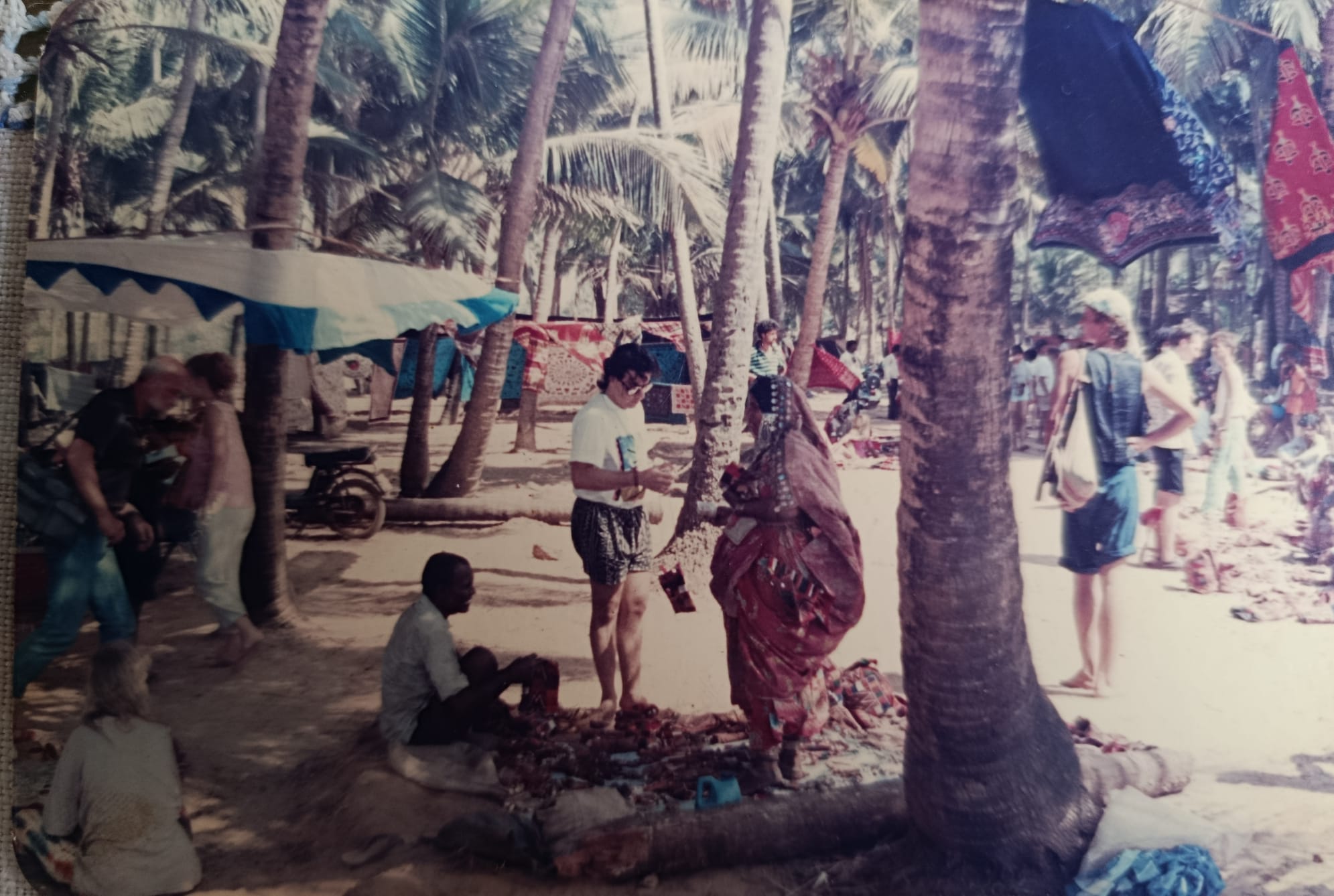
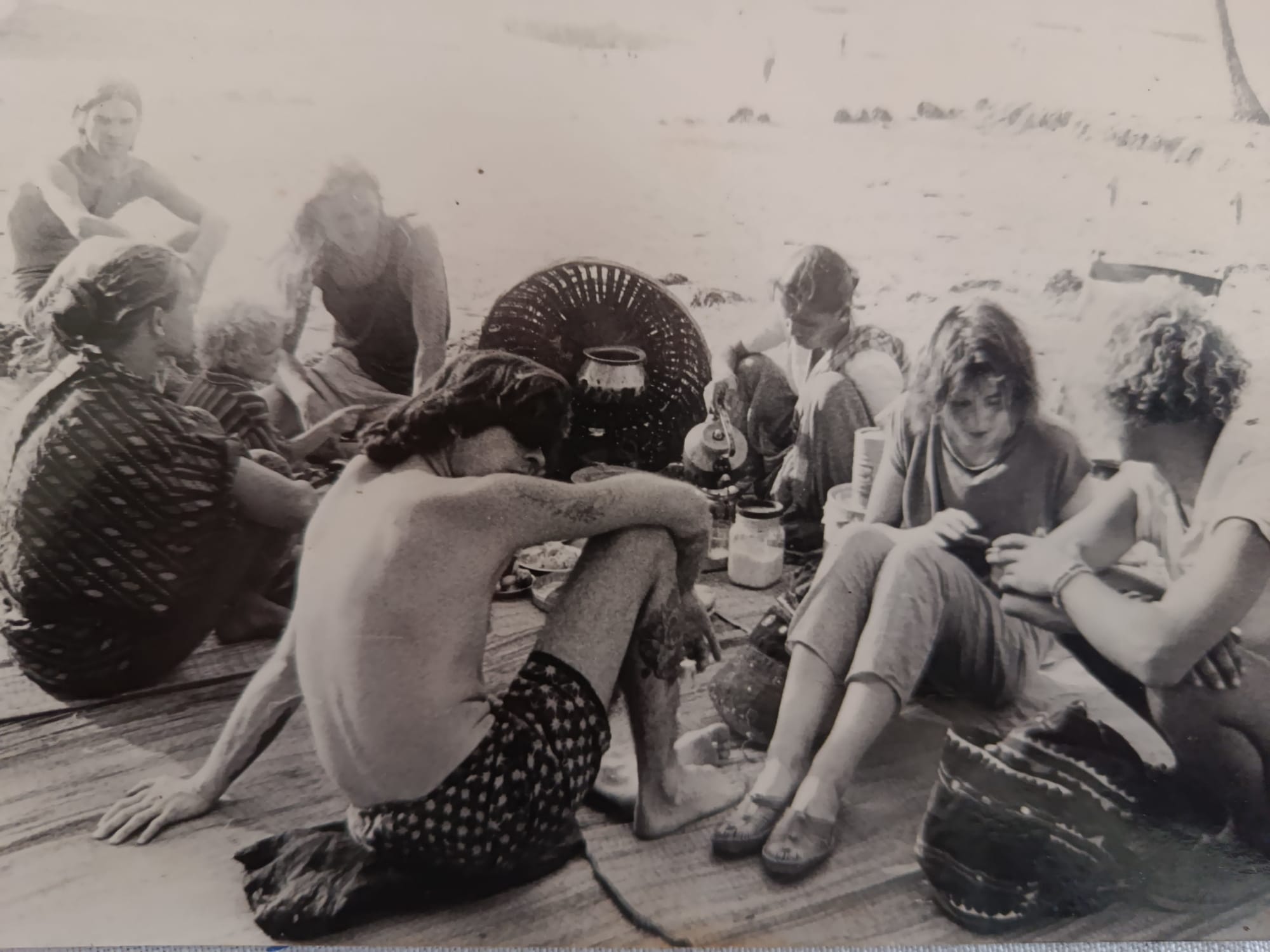
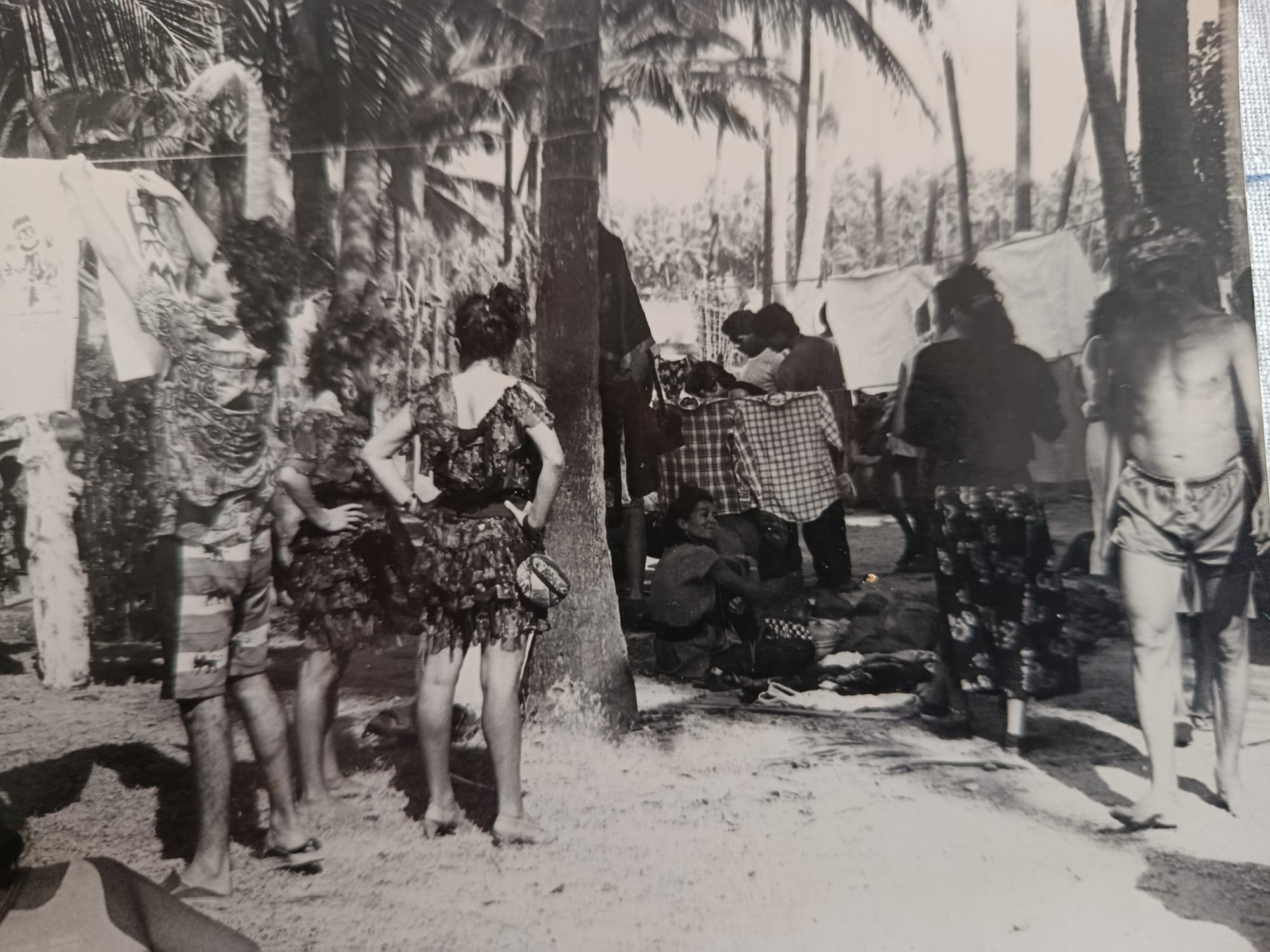
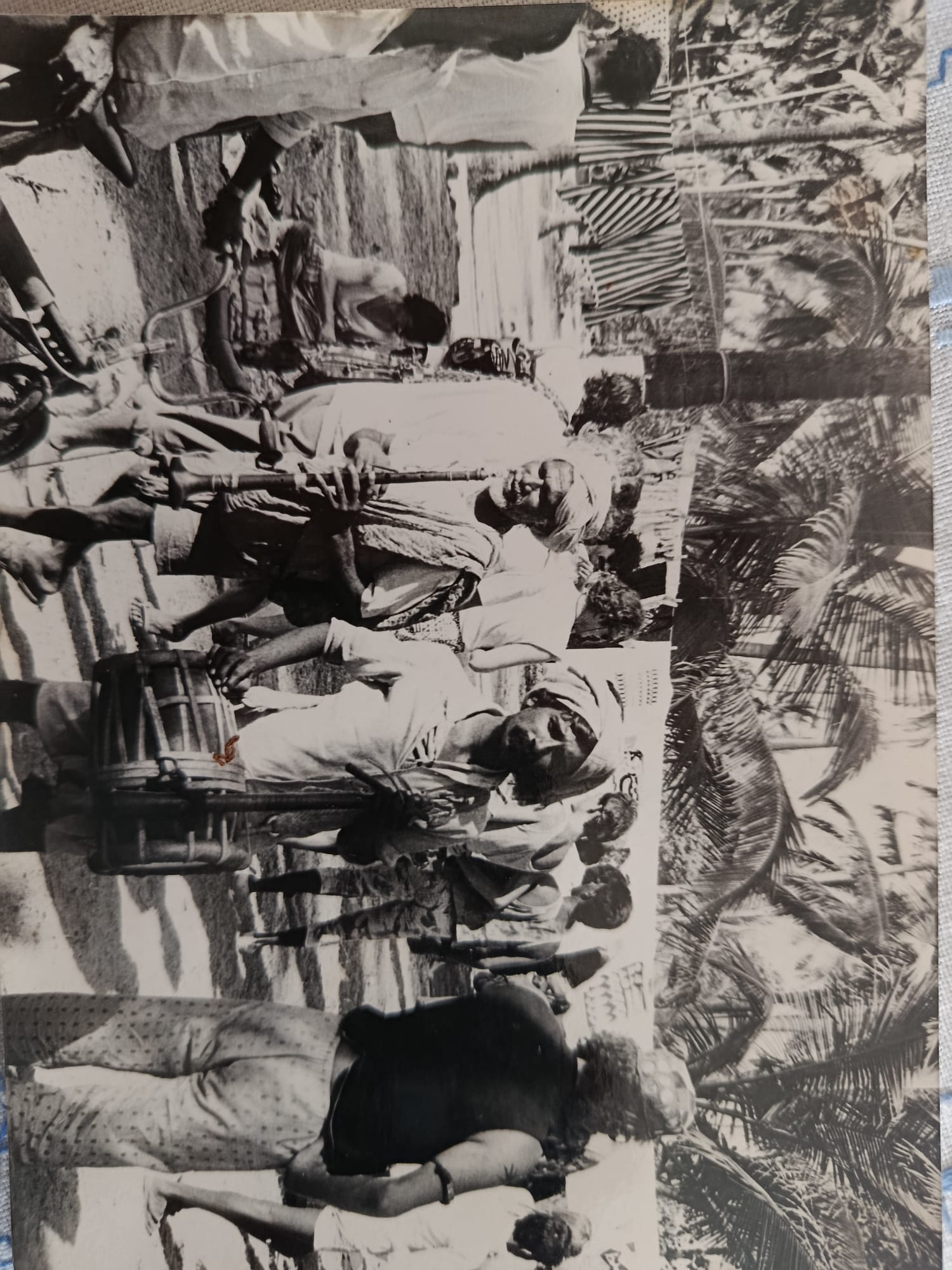
Once there, he encountered a completely different world. Beaches, jungle, colourful crowds, and parties that could continue for days. A room on the beach, under palm trees, cost as little as 25 cents a day, and the entire lifestyle felt removed from anything he had experienced in Malta.
"I was mind blown," he recalls.
He met another Maltese person there, and the two began going to parties together. It was not simply the music that changed him. It was the entire culture around it. Back in Malta, going to a club could feel like an isolated night out, but in Goa, the party was something much bigger, with people staying for days, travelling together and becoming part of a temporary community. Mario had been introduced to a completely different way of experiencing music.
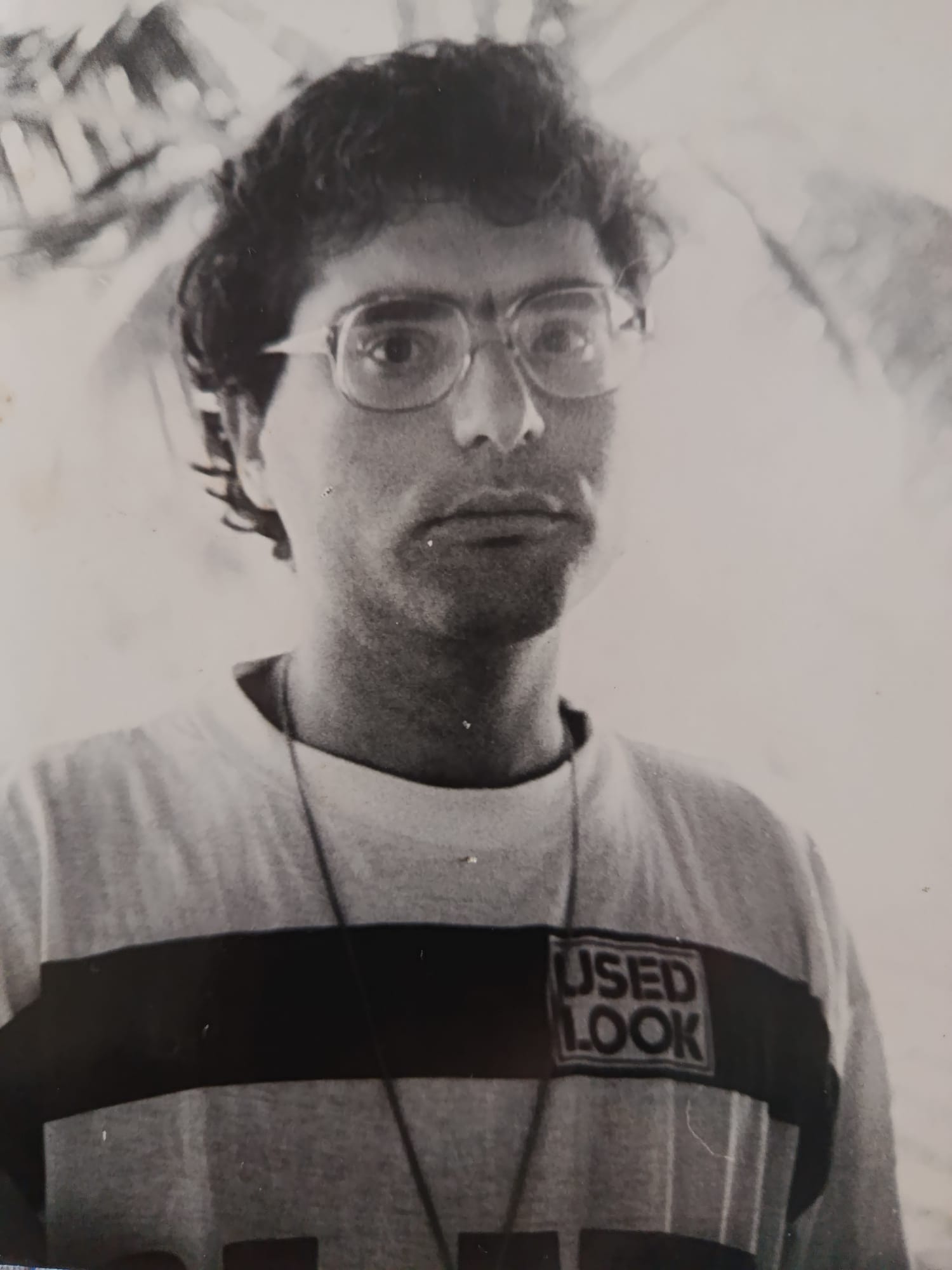
Discovering Acid House in Goa and London
The music he encountered in Goa was unlike anything he had heard at home. This was the period when acid house was emerging, with the Roland TB-303 becoming synonymous with the sound. When Mario returned to Malta, he found himself in London around six months later, where the rave scene was already developing.

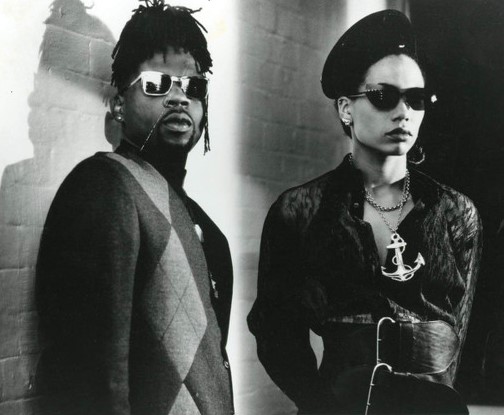
He remembers visiting The Fridge and seeing the kind of activity that was beginning to surround electronic music in Britain, including Soul II Soul playing for free during a video shoot. London reinforced what he had experienced in Goa, part of a growing culture around electronic music that was very different from the conventional club nights he had known in Malta. By this point, Mario had started thinking about how something similar might work back home.
Early Rave Attempts in Malta
Mario remembers a small party at Tigullio in 1990, organised by a friend from London, playing house and speed garage. Not many people turned up despite the investment she'd put into it.
Axis was also playing electronic music, but Mario makes an important distinction. The music might have been there, but the experience was still that of an 1980s-style commercial club, and it didn't resemble the parties he had encountered in Goa and London, where the music was central to a much more immersive environment.
By then Mario was living in Paceville, on Ball Street, among a mixed group of English and Maltese friends who moved around together almost like a London crew. Surrounded by that crowd, the idea for the first two events began to take shape.
The Mnajdra Summer Solstice Rave
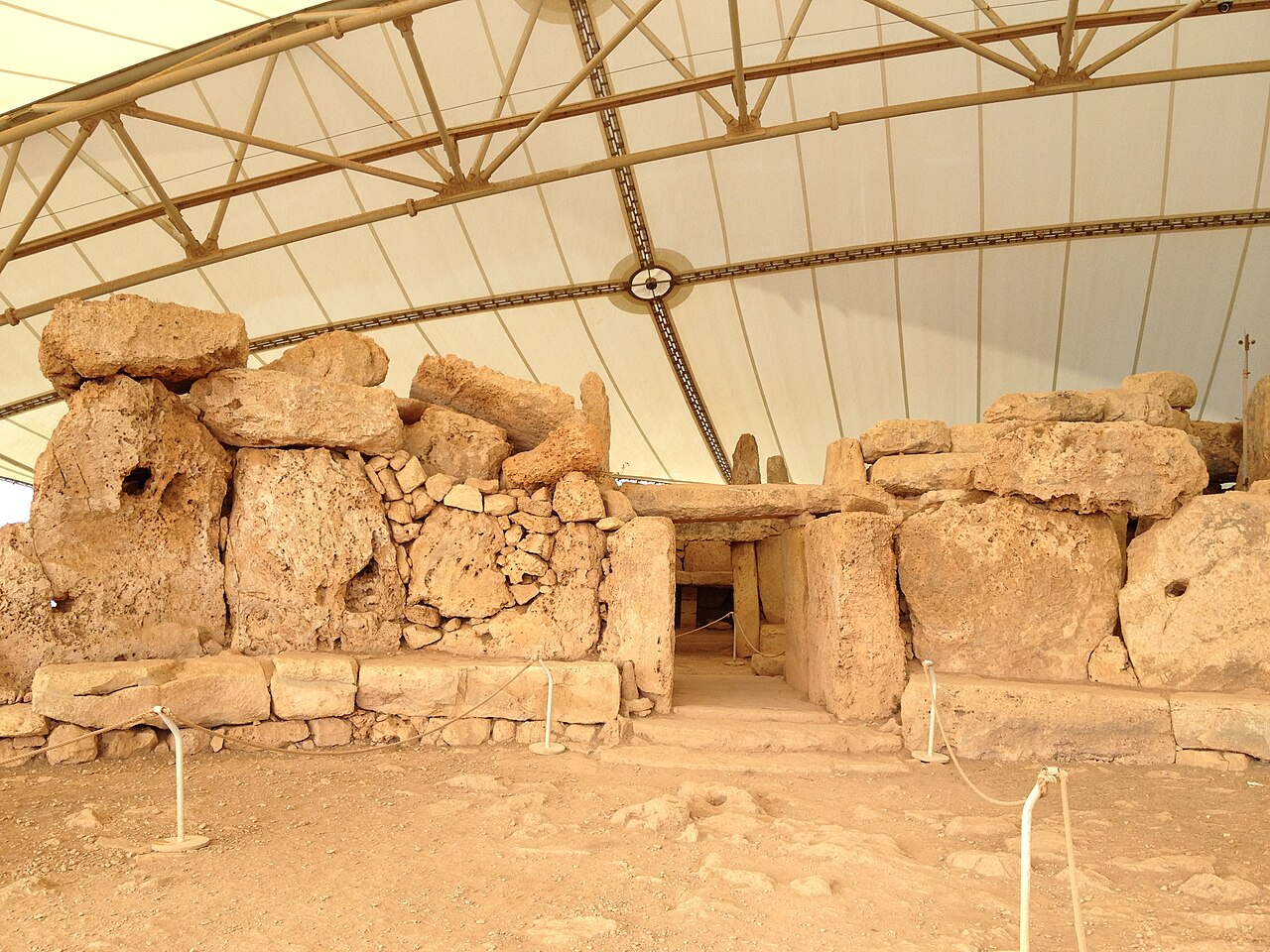
The first of the two parties took place at Mnajdra on 21 June 1991, organised by Mario and a friend and named Summer Solstice. It was financed through credit cards, which had only just become available in Malta at the time.
"I had two credit cards and maxed them."
DJ Chippy and Duncan Camilleri both played that night, alongside another DJ, Diane, who had lived in New York and, as far as Mario knows, was the first woman to DJ in Malta.
Logistics were their own challenge. Getting the sound system onto the site meant sending a large container truck down a narrow concrete path to the clearing outside the temples, where the party was held. The organisers took care to point the speakers away from the temples themselves rather than towards them. The inside of the temple was out of bounds but provided the majestic backdrop for what Mario calls an atavistic celebration, connecting them with the spirit of their ancestors.
"Can you imagine trying to pull that off today?" he laughs.
Around 100 people turned up on the night, a small but significant gathering around a type of music and party culture still in its infancy in Malta. The organisers were just as careful about what they left behind. Mario and others cleaned up any rubbish they found on the site, and he jokes that they even found old Twistees bags that looked like they'd been there for years, their colour long faded. The point was that they didn't want the party to leave a mark on the site.
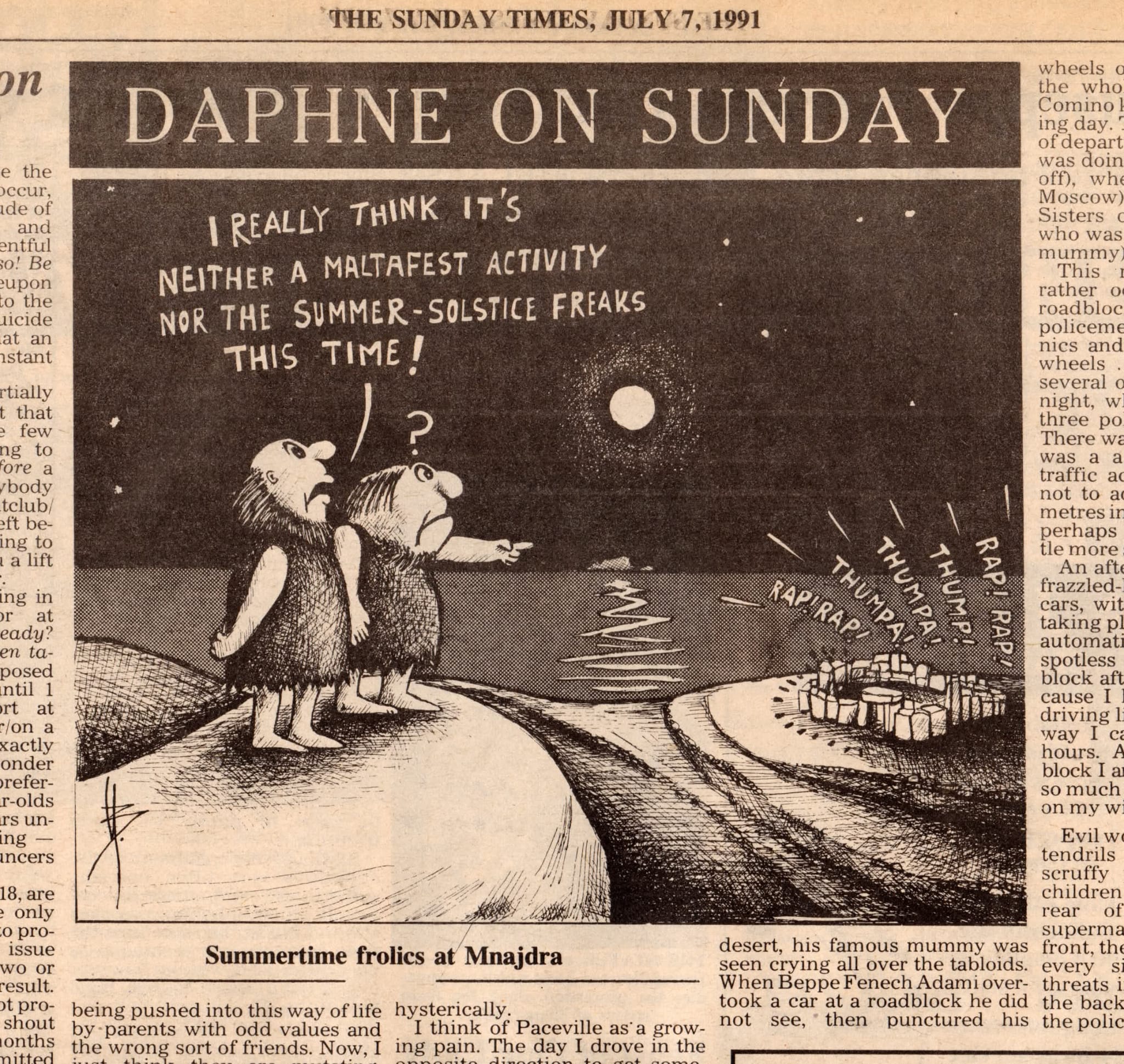
There was no police interruption on the night itself, though the party drew criticism afterwards for taking place at such a historically significant site. It even became the subject of a cartoon in the Times of Malta, poking fun at what had happened at Mnajdra.
Amnesia at Latnija Cave
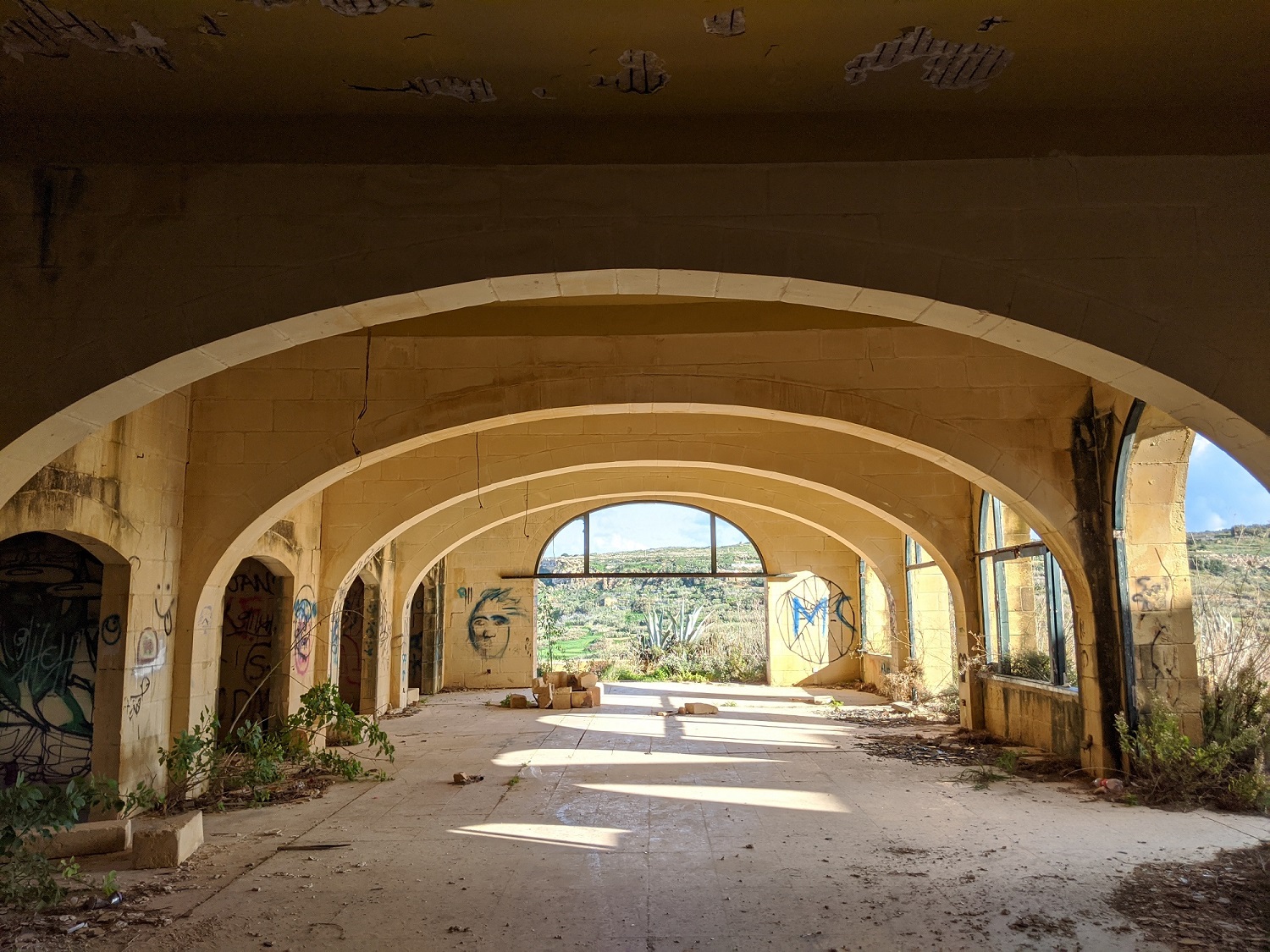
The second event, Amnesia, followed on 5 July 1991, and this time the biggest challenge came before the party had even started. A blackout had hit Malta shortly beforehand, and with the Trade Fair taking place at the same time, every generator on the island had already been rented out.
"There was a generator drought in Malta," Mario remembers.
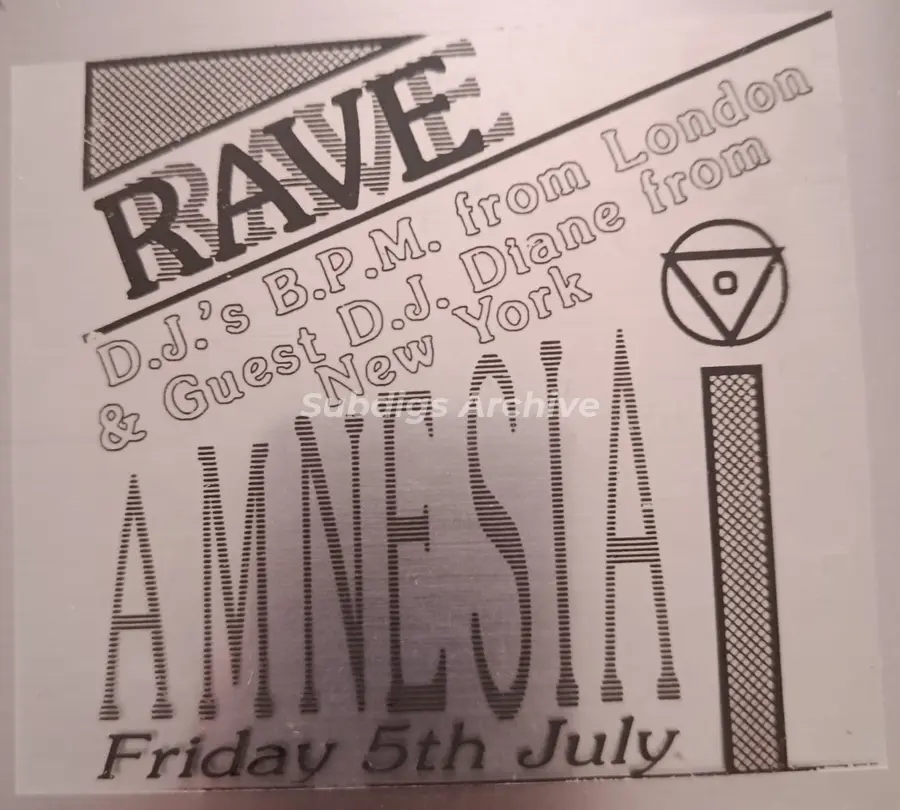
What they eventually found was an enormous diesel generator, so heavy that it took around four people to carry it through the field. Because of the noise, they left it at the top and ran cables down to the cave where the party was being held. At some point during the night, the music stopped due to some generator malfunction. The crowd went nuts, with many on acid (ecstasy hadn't really reached the scene yet). Someone brought down a small ghetto blaster to keep things going, and people stayed. By the time the sun came up, the generator started working again and the sound system came back.
This second event was promoted a little more openly than the first. Flyers were printed and handed out around Paceville a couple of nights before, and the British and Maltese group around Mario spread the word among their own friends. Around 100 people turned up again, foreigners and Maltese high society among them.
A Small Beginning Before SIN
Mario doesn't claim that his two events created Malta's rave scene on their own. There were already people experimenting with electronic music, including the earlier Tigullio party and electronic sets at established clubs. What was different about the Mnajdra Temples and Latnija Cave parties was the attempt to recreate the rave experience itself. The events were free and held in unusual locations, built around electronic music and the idea of recreating the kind of environment Mario had experienced abroad.
"I was trying to recreate what I had experienced in Goa and London," he says.
Mario describes it simply as the beginning, "the genesis," he says, laughing.
The two parties also marked the end of his own involvement as an organiser. With the money on his credit cards exhausted and no ticket revenue to replace it, there was little way to continue.
Some of the people who attended those early parties would go on to become involved in SIN the following year, when Joe Qoni and others began organising a new series of events that would take Malta's emerging electronic music scene to another level.
SIN Takes the Scene to Another Level
In 1992, the scene changed. The SIN parties brought a level of organisation, production and ambition that went well beyond his two events. They were still underground and often secretive, but now operating on a different scale, with unusual venues, DJs and international influences drawing in a growing crowd. Mario attended them all and remembers them as some of the best parties Malta had seen.
The first parties were held at Natasha's, followed by events including Ulysses Lodge and parties on the Karwela travelling to Comino. Ulysses Lodge stood out even among those. Nobody knew where it was being held until they simply turned up, and once inside, they found cages with dancers performing through the night, feeding rumours that it was some kind of black mass. Malta, Mario says, hadn't seen anything like it.
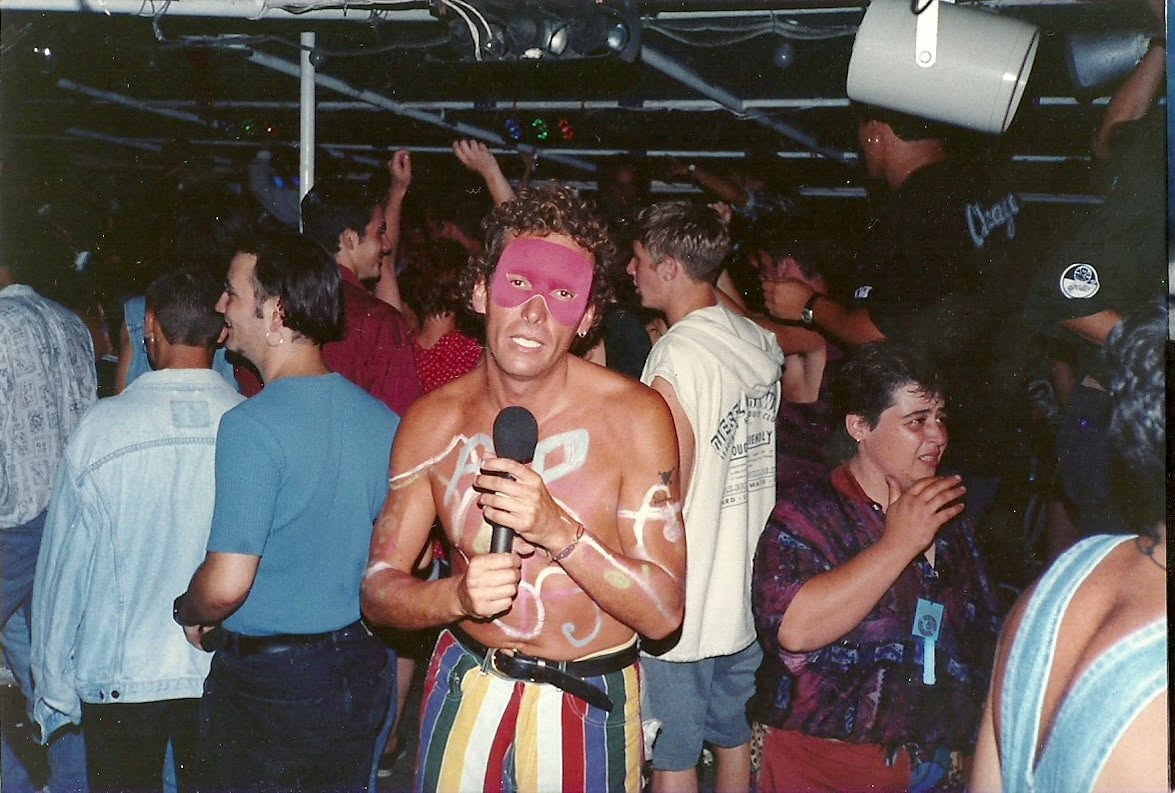
The Karwela parties were also particularly memorable. MC Bobby Devil became part of the experience, running barefoot through the darkness of Comino in a devil mask, shouting to the crowd. Mario says he normally dislikes MCs, but Bobby Devil was different.
"He was really what an MC should be like."
The parties weren't simply about listening to electronic music. They had developed their own atmosphere and identity, and the scene was still small enough that people recognised one another. You might dance next to a complete stranger, smile at them, and end up becoming friends, with little of the aggression that could be associated with nightlife elsewhere.
"It was a very loving, happy vibe," Mario recalls.
It wasn't all easy going, though. Police searches at SIN parties could mean being pulled aside and strip-searched, and an arrest could follow for as little as a roach. Mario remembers a friend caught with one who spent five years going back and forth to court over it.
The music itself was also less divided than it would later become. There wasn't yet a rigid separation between house, techno and trance, and DJs played different styles within the same night, so people could all party together without having to identify with a particular musical tribe. Later, the scene would become more divided into genres and audiences.
At this stage though, it was simply referred to as underground music.
The End of SIN
Mario remembers the final SIN party at Numero Uno, a night of heavy rain and thunderstorms that did little to stop the crowd. The police seemed to think the weather would bring things to an early end. They were wrong. People kept dancing in the rain, and when the music was stopped at one point, Joe Qoni turned it back on, keeping things going until 5am. When it was finally turned off for good, people kept going anyway with drums and tables, Bobby Devil still shouting over it all.
"Even God is trying to stop us!", Bobby Devil shouted over the mic.
For Mario, it was a fitting end to that period. The SIN parties had lasted only a relatively short time, but their influence continued. Joe Qoni went on to open Ministry of Time, and also ran Ghall-Kafe and St George's Lido. Joe had a solid grip on Malta's club scene with people raving at night, then heading to the 24-hour Ghall-Kafe, and recovering at the Lido during the day.
Other events and promoters followed, including Masu and Follow the White Line, as the underground electronic scene developed further.
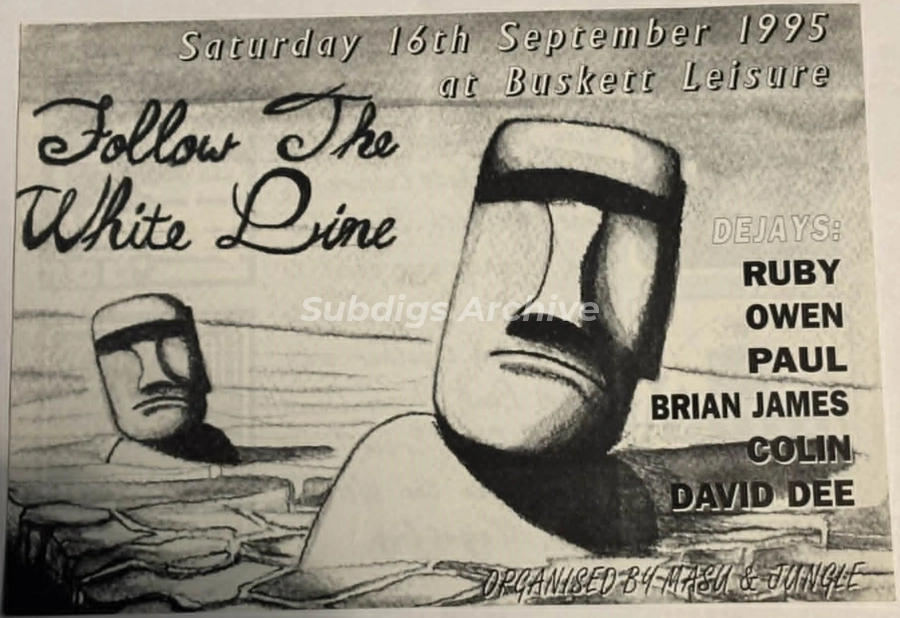
Another thing that made those early parties different was how little information people had. There was no internet, and word about an event often only spread shortly beforehand, sometimes without even naming where it was happening until people arrived. Mario had experienced the same thing in Goa, where you wouldn't know where a party was until midnight, when you'd head to a taxi stand and ask around. The Maltese scene had its own version of that mystery, just smaller still. Malta is tiny, and the community was even smaller, with people meeting in the same places and word spreading fast among familiar names. The scene grew through personal connections rather than algorithms or advertising.
From Early Parties to a Scene
What happened next was a gradual shift from a small, spontaneous underground culture into something more established. Promoters began obtaining permits, more venues became involved, and Malta increasingly attracted international DJs. But Mario remembers the earlier period as something that was difficult to reproduce once the scene got bigger. Back then, part of the excitement came from not knowing what was going to happen. You could hear about a party at the last minute, not know the venue, not know who was playing, and everyone was discovering it all together.
People were also travelling abroad and returning with new records, new ideas and new influences, with Goa, London and Thailand all feeding into a local scene still finding its identity. Mario eventually left Malta in 1997 for Scotland, continuing to party there, including a few trips to Glastonbury Festival.
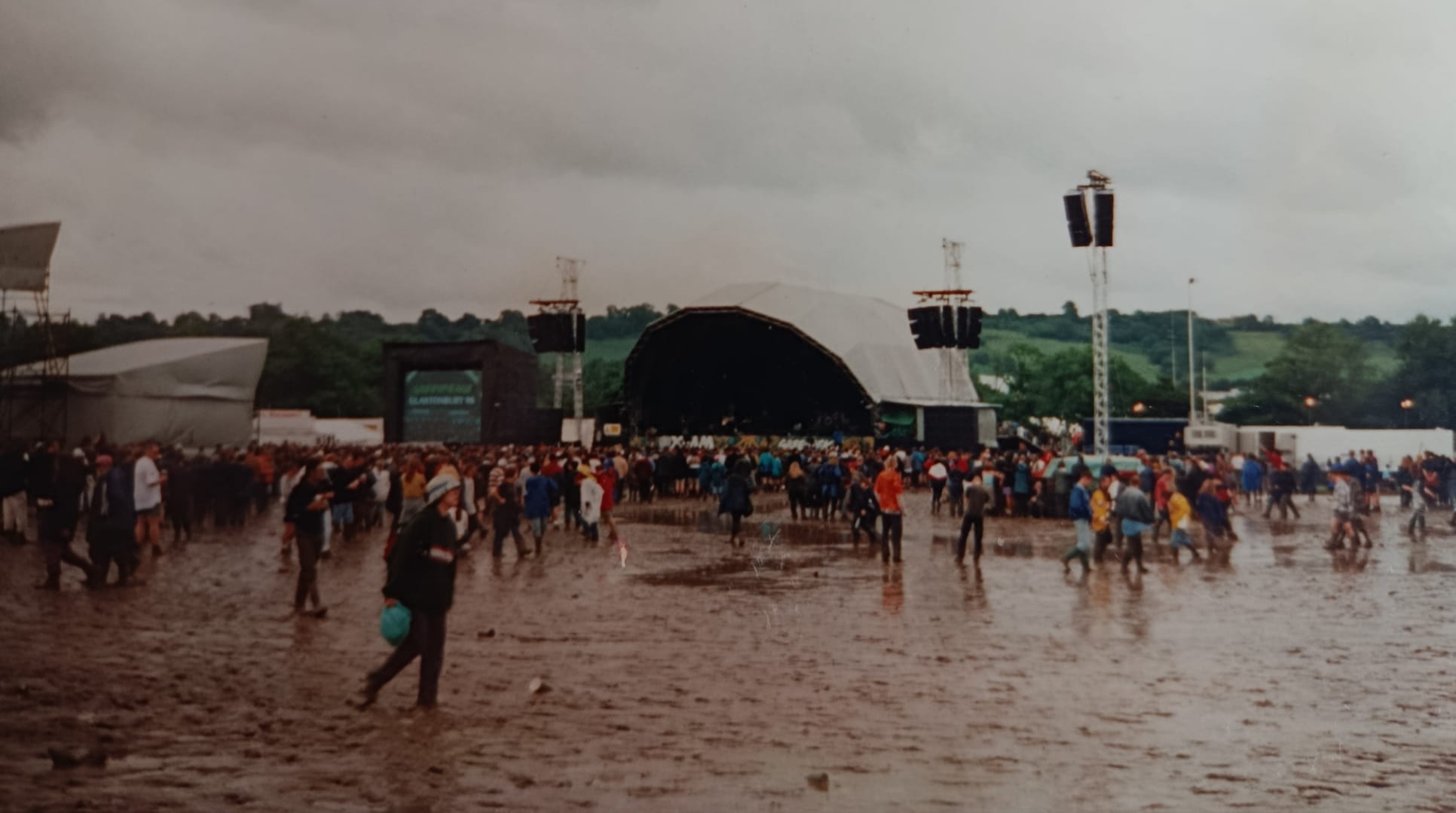
By then, though, the transformation was already well underway. The same thing that had made places like Goa so special could also become their downfall. As a scene grows more popular, more people arrive, and what was once small and intimate becomes bigger and more commercial.
"Something beautiful becomes a victim of its own success," Mario says.